
Servo Rotary Table for Programmable Automation Positioning
A servo rotary table is designed for automated equipment that requires controlled angle, repeatable positioning, smooth acceleration, and programmable rotary motion. It is commonly used in assembly stations, inspection systems, packaging machinery, robotic workcells, and custom automation modules.
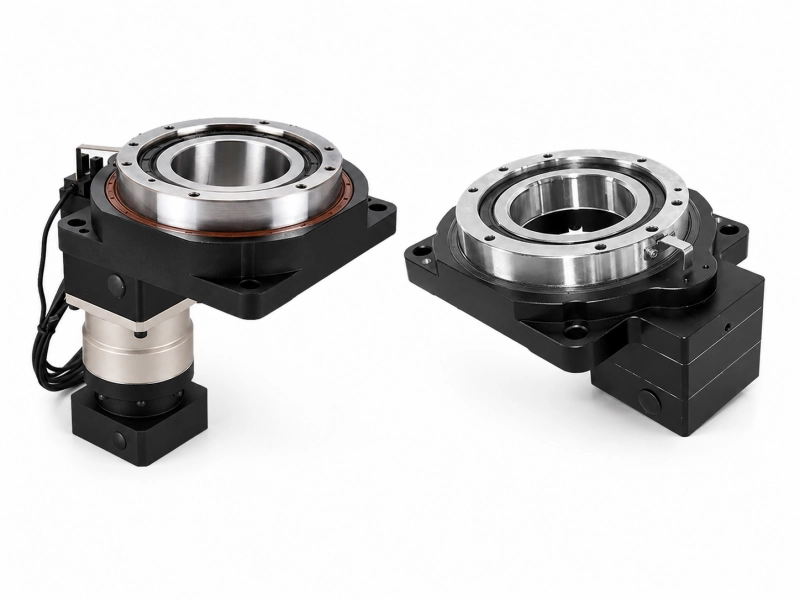
What Is a Servo Rotary Table?
A servo rotary table is a rotary positioning table driven by a servo motor. It is selected when the machine needs controlled angular movement, repeatable positioning, adjustable speed, acceleration control, and integration with an automation control system.
The focus of this page is servo-controlled rotary motion. Related terms such as hollow rotary table, hollow rotary actuator, and servo rotary indexer are mentioned only for comparison and internal linking.
Built for Buyers Who Need Servo Control
Buyers searching for a servo rotary table usually care about motion control more than only the physical table shape. They want to know whether the table can rotate to a defined angle, repeat the same position, follow a production cycle, and work with a chosen servo motor or control system.
That is why this page explains angle control, motion cycle, motor matching, load condition, indexing behavior, and selection information instead of repeating the same content from hollow rotary actuator or hollow rotary table pages.
Why Servo Driven Rotary Tables Are Used in Automation
A servo driven rotary table gives machine builders more control over position, speed, acceleration, and production rhythm.
Programmable Angle
The table can move to specific angular positions according to the machine program or process requirement.
Repeatable Positioning
Suitable for inspection, assembly, indexing, and transfer tasks that require consistent positioning.
Controlled Speed
Servo control helps adjust speed, acceleration, deceleration, and dwell time in automated cycles.
System Integration
Can be integrated with PLCs, motion controllers, sensors, inspection systems, and robotic stations.
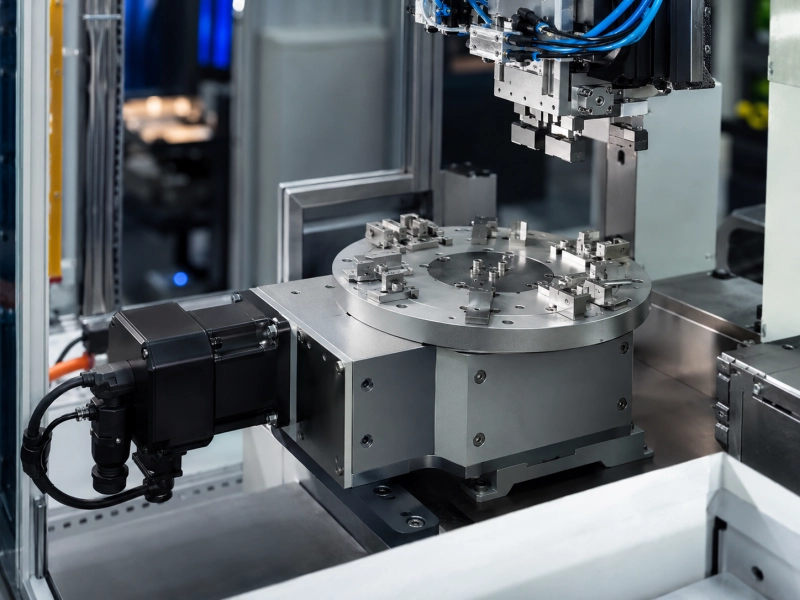
How a Servo Rotary Table Works in a Machine
Servo Motor Receives Motion Command
The control system defines the angle, speed, acceleration, and cycle timing required for the operation.
Rotary Table Moves to Target Position
The table rotates the fixture, workpiece, inspection target, or station component to a programmed angle.
Process Runs at the Position
Assembly, inspection, laser marking, dispensing, loading, or packaging operations can be completed at each stop.
Cycle Repeats Automatically
The table follows the production rhythm, making it suitable for repeatable automation and indexing tasks.
How to Choose a Servo Rotary Table
A servo rotary table should be selected based on load condition, table diameter, motor requirement, speed, cycle time, positioning accuracy, and installation space. The best choice depends on the machine process, not only the table size.
For a new project, provide the motion cycle and application requirement first. This helps evaluate whether the system needs a servo driven rotary table, hollow rotary table, or servo rotary indexer.
Servo Rotary Tables in Automated Production Systems
The servo rotary table is selected when the process needs programmed rotation, accurate stops, and repeatable cycle control.
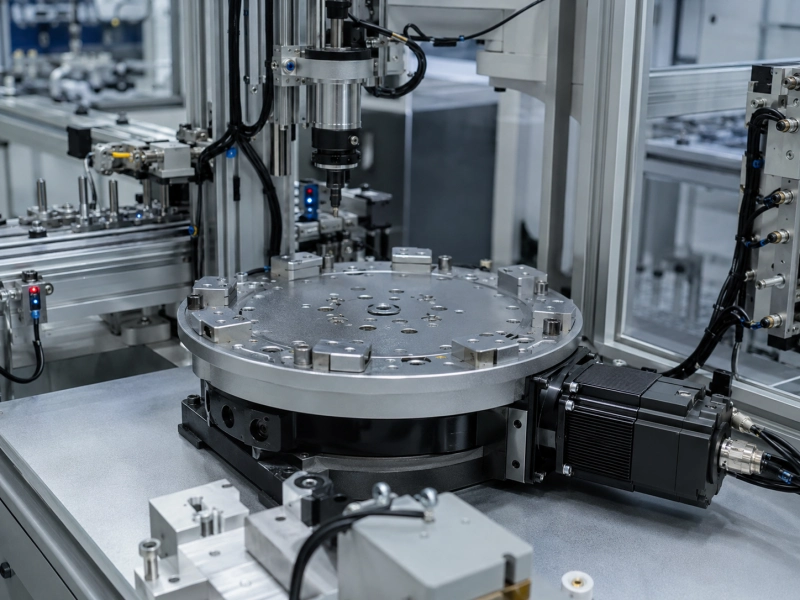
Automation Workstations
Used for rotating fixtures between loading, processing, inspection, assembly, and unloading positions in automated equipment.
Packaging Machinery
Supports filling, labeling, sealing, sorting, and rotary station movement where process timing must be controlled.
Inspection Equipment
Rotates parts for vision inspection, laser measurement, optical positioning, and quality control tasks.
Robotic Cells
Works as a controlled rotary station for robot loading, part orientation, and automated handling operations.
Custom Machines
Used in OEM equipment when the motion cycle must match the machine program and production rhythm.
Servo Rotary Table vs Related Rotary Products
These terms can overlap, but the buying intent is different. This helps avoid keyword cannibalization and wrong product selection.
Servo Rotary Table
Best when the project needs programmable rotary positioning, angle control, speed control, and repeatable automation cycles.
Hollow Rotary Table
Best when the project focuses on center bore access, fixture support, table surface, and hollow structure.
Servo Rotary Indexer
Best when the project needs station-to-station indexing, multi-position transfer, and fixed-step motion.
Information Needed for Servo Rotary Table Selection
To recommend a suitable servo rotary table, we need to understand the motion cycle, load, positioning accuracy, motor requirement, and machine layout. If a servo motor or controller has already been selected, please include that information.
For OEM equipment, drawings or simple layout sketches are helpful because they show the table size, fixture position, load center, and available installation space.
Send Servo Rotary Table RequirementFrequently Asked Questions About Servo Rotary Tables
What is a servo rotary table?
A servo rotary table is a rotary positioning table driven by a servo motor. It is used when automated equipment requires programmable angle control, repeatable positioning, speed control, and motion cycle integration.
What is the difference between a servo rotary table and a servo driven rotary table?
In most buying situations, these terms describe the same type of product. “Servo driven rotary table” emphasizes that the rotary table is driven and controlled by a servo motor.
Where are servo rotary tables commonly used?
They are used in assembly stations, packaging machinery, inspection equipment, robotic workcells, laser processing, electronic assembly, and custom automation systems.
How is a servo rotary table different from a hollow rotary table?
A servo rotary table emphasizes servo control, programmable motion, and repeatable angular positioning. A hollow rotary table emphasizes the table structure, center bore access, and fixture support.
How do I choose the right servo rotary table?
Important factors include load weight, fixture size, table diameter, rotation angle, speed, acceleration, cycle time, positioning accuracy, motor mounting, and available installation space.
Can you support servo motor matching?
Yes. Servo motor matching can be discussed based on motor brand, flange size, shaft diameter, encoder requirement, controller type, and machine layout.
Need a Servo Rotary Table for Your Automation Project?
Send us your load, motion cycle, angle requirement, servo motor information, and installation space. We will help you evaluate a suitable servo driven rotary table for your equipment.