
Servo Rotary Indexer for Multi-Station Automation and Step-by-Step Transfer
A servo rotary indexer is used when automated equipment needs repeatable station-to-station movement, fixed-angle indexing, controlled rotary transfer, and synchronized cycle timing. It is commonly applied in packaging lines, assembly systems, inspection equipment, and automated production stations where multiple process points are arranged around one indexing table.
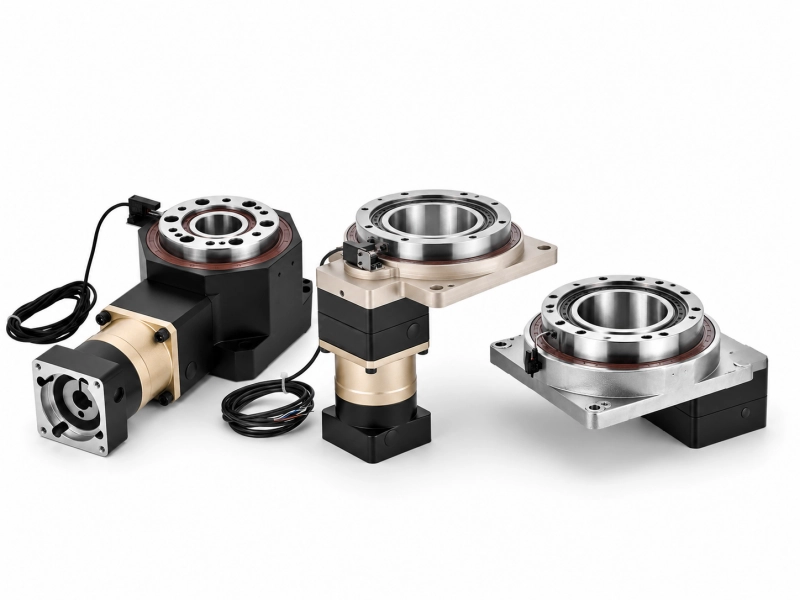
What Is a Servo Rotary Indexer?
A servo rotary indexer is a rotary positioning unit designed for indexed movement between multiple stations. Instead of only emphasizing continuous angle control, this product page focuses on step-by-step indexing, fixed stop positions, synchronized transfer, and cycle-based production movement.
Buyers searching for a servo rotary indexer usually want a rotary mechanism that moves a fixture, workpiece, or carrier from one operation station to the next with stable timing and repeatable stops. That is why this page is built around multi-station automation rather than general rotary positioning.
Related phrases such as servo rotary index table, servo rotary index tables, servo driven rotary indexing table, and servo rotary indexing table are included naturally on this page because they describe similar search intent. However, the main keyword boundary remains focused on servo rotary indexer.
This Page Targets Indexing Motion, Not General Table Keywords
Main keyword: servo rotary indexer
Secondary keywords: servo rotary index table, servo rotary index tables, servo driven rotary indexing table, servo rotary indexing table
Main buyer intent: multi-station transfer, fixed-angle indexing, packaging/assembly station movement
Different from servo rotary table: this page centers on station indexing flow, not only programmable angle control
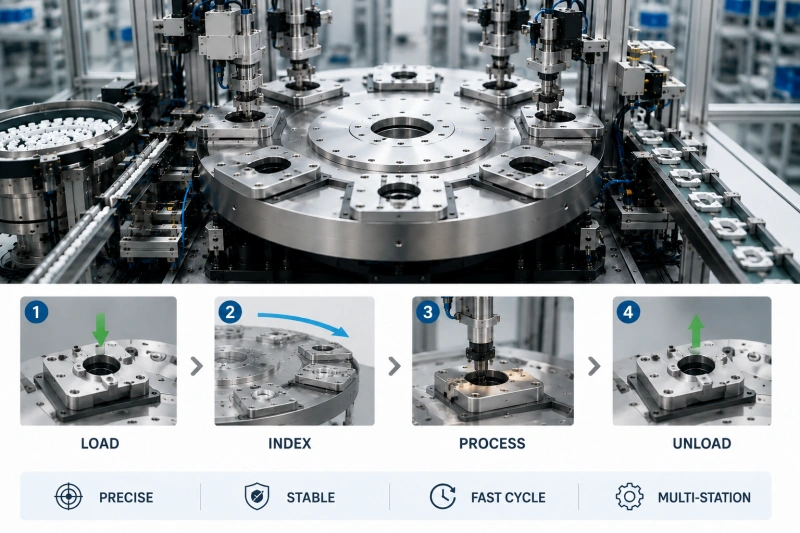
Typical Servo Rotary Indexing Flow in an Automation Cycle
The value of a servo rotary indexer is not only rotation. Its real value is controlled station transfer inside a structured production sequence.
Load
Parts or fixtures are loaded at the first station before the indexing cycle begins.
Index
The indexer rotates by a fixed angle and moves each station to the next process point.
Process
Filling, assembly, inspection, fastening, labeling, or testing is completed at each stop.
Repeat
The cycle repeats according to machine rhythm for stable and repeatable production flow.
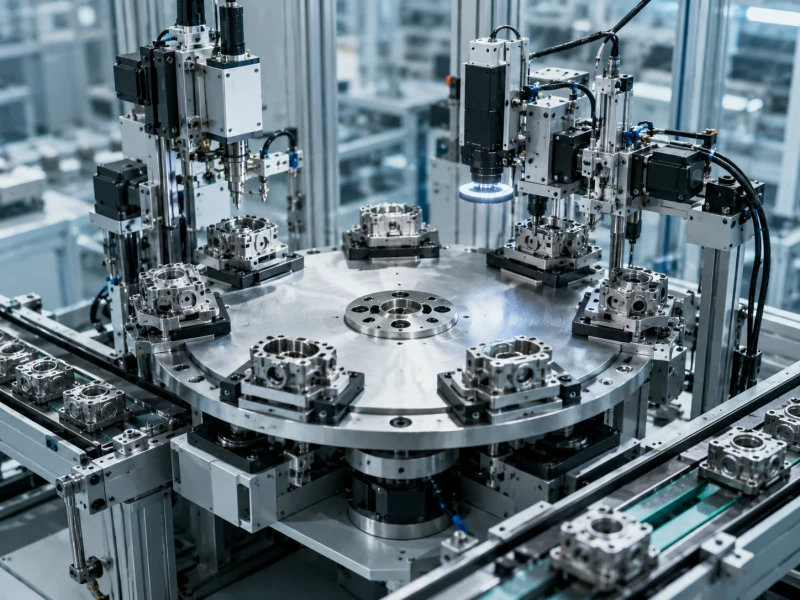
How a Servo Rotary Indexer Works in Automated Equipment
In a typical machine, the servo system sends an indexing command, the rotary indexer moves to the next position, and the table stops at a defined angular point for the process to run. This makes it suitable for machines that need multiple stop positions arranged around a circular work path.
Compared with a general servo rotary table, an indexer page must speak more about station count, indexing angle, cycle time, dwell time, and transfer sequence. Those are the real decision points for buyers in packaging, assembly, and automated handling equipment.
How to Choose the Right Servo Rotary Indexer
A servo rotary indexer should be selected based on the full process cycle rather than only the outside size. Important factors include station number, indexing angle, load weight, fixture structure, dwell time, cycle frequency, stop accuracy, and installation space.
If the application needs a circular production sequence, one of the first questions is whether the machine requires a simple rotary positioning table or a servo driven rotary indexing table. If the motion is organized around several work stations with repeated step movement, an indexing product is usually the more suitable direction.
Where Servo Rotary Indexers Are Commonly Used
Servo rotary indexers are chosen when the production system needs station-to-station transfer in a rotary format.

Packaging Machinery and Rotary Transfer
Used in filling, capping, labeling, sealing, sorting, and transfer systems where each product must move through several process stations in a repeating sequence.
Assembly Stations
Supports indexed movement between loading, fastening, pressing, testing, and unloading stations in semi-automatic or fully automatic assembly equipment.
Inspection Systems
Allows parts to move station by station through vision checking, measurement, marking, or final inspection processes.
Electronics and Small Parts Handling
Useful for compact production lines where a circular workstation layout saves space and improves process flow.
Custom OEM Machines
Applicable when machine builders need a servo rotary indexing table matched to their own fixture, process sequence, and automation program.
Servo Rotary Indexer vs Related Rotary Products
This page is intentionally structured to avoid overlap with other product pages while still guiding the user to the correct category.
Servo Rotary Indexer
Best for step-by-step rotary transfer, multi-station production flow, fixed-angle indexing, and repeated stop positions in packaging or assembly machinery.
Servo Rotary Table
Best for programmable angle control and servo-driven positioning when the main focus is controlled rotation rather than station indexing flow.
Hollow Rotary Table
Best for center-bore access, fixture installation, and table support when the buying focus is structure and mounting rather than indexed transfer.
Information Needed for Servo Rotary Indexer Recommendation
To recommend a suitable servo rotary indexer, it is helpful to know the total number of stations, the indexing angle, the load on each station, the required cycle time, and the process that runs during each stop. This makes the technical evaluation much more accurate.
If you already have a machine drawing, sample fixture, or process layout, that information can help evaluate whether a servo rotary index table or a different rotary structure is more suitable.
Send Your Indexer RequirementFrequently Asked Questions About Servo Rotary Indexers
What is a servo rotary indexer?
A servo rotary indexer is a rotary motion unit used for indexed movement between multiple fixed stations. It is commonly selected for packaging, assembly, and inspection machines that require repeatable step-by-step transfer.
What is the difference between a servo rotary indexer and a servo rotary table?
A servo rotary table focuses more on programmable rotary positioning and angle control. A servo rotary indexer focuses more on indexed station transfer, fixed stop positions, and multi-station cycle operation.
What is a servo rotary index table?
In many search cases, “servo rotary index table” and “servo rotary indexer” describe the same buying intent. Both refer to a rotary indexing unit used for controlled multi-station movement.
Where are servo rotary indexers commonly used?
Common applications include packaging lines, assembly stations, testing equipment, inspection systems, electronics production, and custom automation machinery.
How do I choose the right servo driven rotary indexing table?
The key factors are number of stations, indexing angle, load weight, cycle time, fixture layout, positioning accuracy, and available installation space. Process flow should also be considered.
Can the station number be customized?
In many OEM projects, station arrangement, fixture size, and machine integration details can be discussed according to the actual process requirement.
Need a Servo Rotary Indexer for a Multi-Station Machine?
Send us your station number, indexing angle, load, cycle time, and application process. We will help evaluate a suitable servo rotary indexer or servo rotary indexing table for your automation project.